USA
These units have been in use in the USA for decades.


Hydrolysis with silver and copper ionization. The system runs on fresh water and does not produce chlorine.
The only system on the market that can run on fresh water and without producing chlorine. It does not allow algae or biofilm to develop. It purifies water (H₂O) with water's own components, H and O. Copper (Cu) and silver (Ag) kill algae and bacteria. It keeps the water clean for years.
Investing in a pool is more than just paying large sums for the installation. It is an investment in expert pool builders who can bring your dreams and ideas to life.
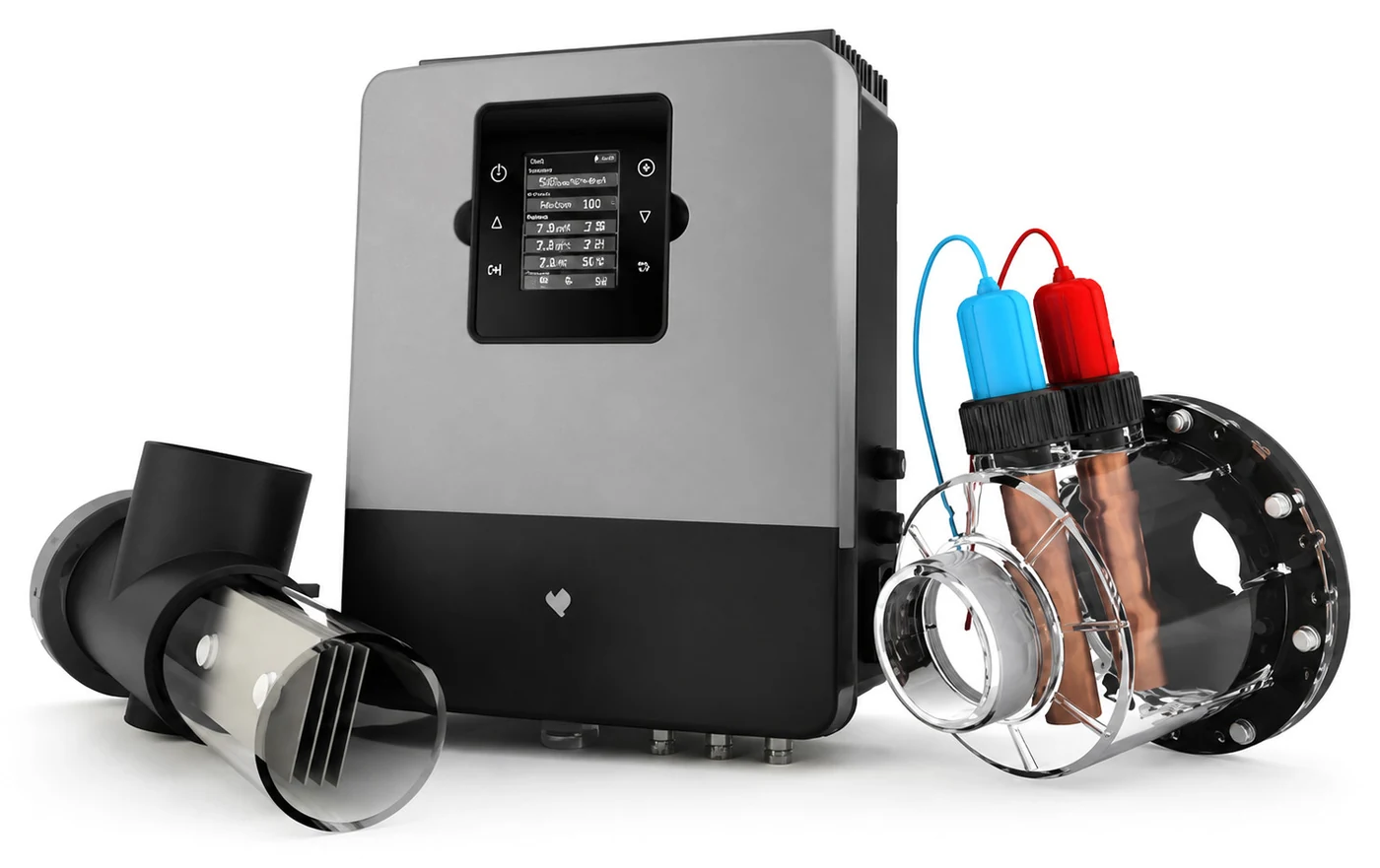
The current breaks down water molecules; the oxidants formed disinfect the water and return to it. Copper and silver ionization adds antibacterial and algaecidal action.
Water (H₂O) consists of two hydrogen atoms and one oxygen atom. Etymologically, hydrolysis means the breakdown of water molecules. When a current passes through water the chemical bonds are broken and the negative charge, that is the oxygen ions, moves to the positive electrode (the anode). The resulting reaction is as follows: electric current + 2 H₂O = 2 H₂ + O₂.
Numerous secondary reactions take place during hydrolysis, and they also produce ions that can act as oxidants and have disinfecting properties.
Hydrolysis breaks water molecules (H₂O) down into H and O atoms, causing free radicals to form. These free radicals make up oxidants that are stronger than chlorine: OH⁻ (hydroxyl radical), O (atomic oxygen), O₃ (ozone), H₂O₂ (hydrogen peroxide) and O₂ (oxygen). The advantage is that these radicals disinfect the water within a few seconds and then return to the water, so no harmful by-products form, as they do with chlorine. Alongside these free radicals a small quantity of sodium hypochlorite is produced, which ensures a residual effect in the pool.
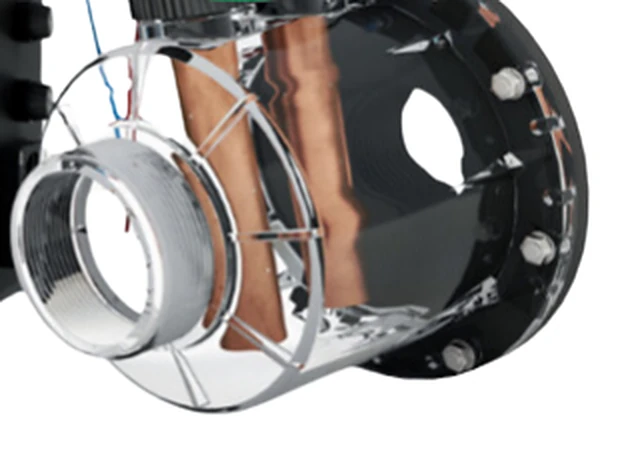
The joint presence of Cu/Ag ions delivers significant energy for the efficiency of hydrolysis, provided that the antibacterial and algaecidal power of the Cu/Ag ionization system is complemented by a high degree of oxidation from the hydrolysis system. They then work in a free and natural cycle, without adding chemical products to the pool water.
An effective antibacterial agent: copper attacks and disperses the respiratory enzymes of algae and bacterial particles, and further reduces oxygen use and increases fermentation. With the combination of the two components, copper and silver, the progression of disinfection is geometric.
James C. V. (1971) found that all silver salts are bactericides and that a concentration of silver particles in water of 10⁻⁵ is toxic to E. coli and bacilli (the rod-shaped type of bacterium).
The working principle of hydrolysis oxidation rests on the ability of copper (Cu⁺⁺) and silver (Ag⁺) to act as a flocculant and a bactericide, and on the hydrolysis system producing oxygen, ozone and hydrogen peroxide (hydrogen peroxide is used to kill Legionnaires' disease). Together these components make complete water treatment possible on the basis of oxidative flocculation, without using any chemicals.
In water with low conductivity (from 500 mS), hydroxyl, ozone, hydrogen peroxide and oxygen are produced locally and automatically to disinfect the water. The system also contains a copper/silver ionizer. There is no need to add salt. The system can nevertheless run with more than 1 gram of salt per liter in order to produce more chlorine; the salt concentration can range from 0 to 100 grams of NaCl per liter.
Additional copper/silver ionization causes a large increase in the power of hydrolysis. The antibacterial and algaecidal properties of copper/silver ionization are complemented by the high oxidative power of the hydrolysis system, and together they result in a natural water purification process without adding chemicals.
The system destroys Legionnaires' disease and at the same time draws biofilm to the places where that organism usually lives, which prevents hidden areas and neglected zones from forming.
USA
These units have been in use in the USA for decades.
NASA
NASA uses them in its space program.
Aviation
Many airlines use them to produce drinking water.
70+ countries
In more than 70 countries they are used in beverage production — alcohol, beer and wine.
Silver has been known since ancient times as one of the finest antibacterial agents, with healing properties. Adding metals as water disinfectants goes back to antiquity — the Phoenicians put silver threads into ceramic and copper amphorae for storing water.
No. The system runs on fresh water and there is no need to add salt. It can also run with salt — with more than 1 gram per liter it produces more chlorine, and the concentration can be from 0 to 100 grams of NaCl per liter.
Yes. Alongside the free radicals, a small quantity of sodium hypochlorite is produced, which ensures a residual effect in the pool.
The radicals disinfect the water within a few seconds and then return to the water, so no harmful by-products form, as they do with chlorine.
The system does not allow algae or biofilm to develop. Copper and silver kill algae and bacteria, and hydrolysis produces oxidants stronger than chlorine.
The system is sized to the pool volume and the way the pool is used. Tell us the dimensions of your pool.