

Pool equipment types
The nine categories of equipment a pool system is made of: what each one does, how it is sized and what to consider before installation.
Filters
Role in the system
The filter handles the mechanical cleaning of pool water.
Filter media
Quartz sand and anthracite.
Sizing
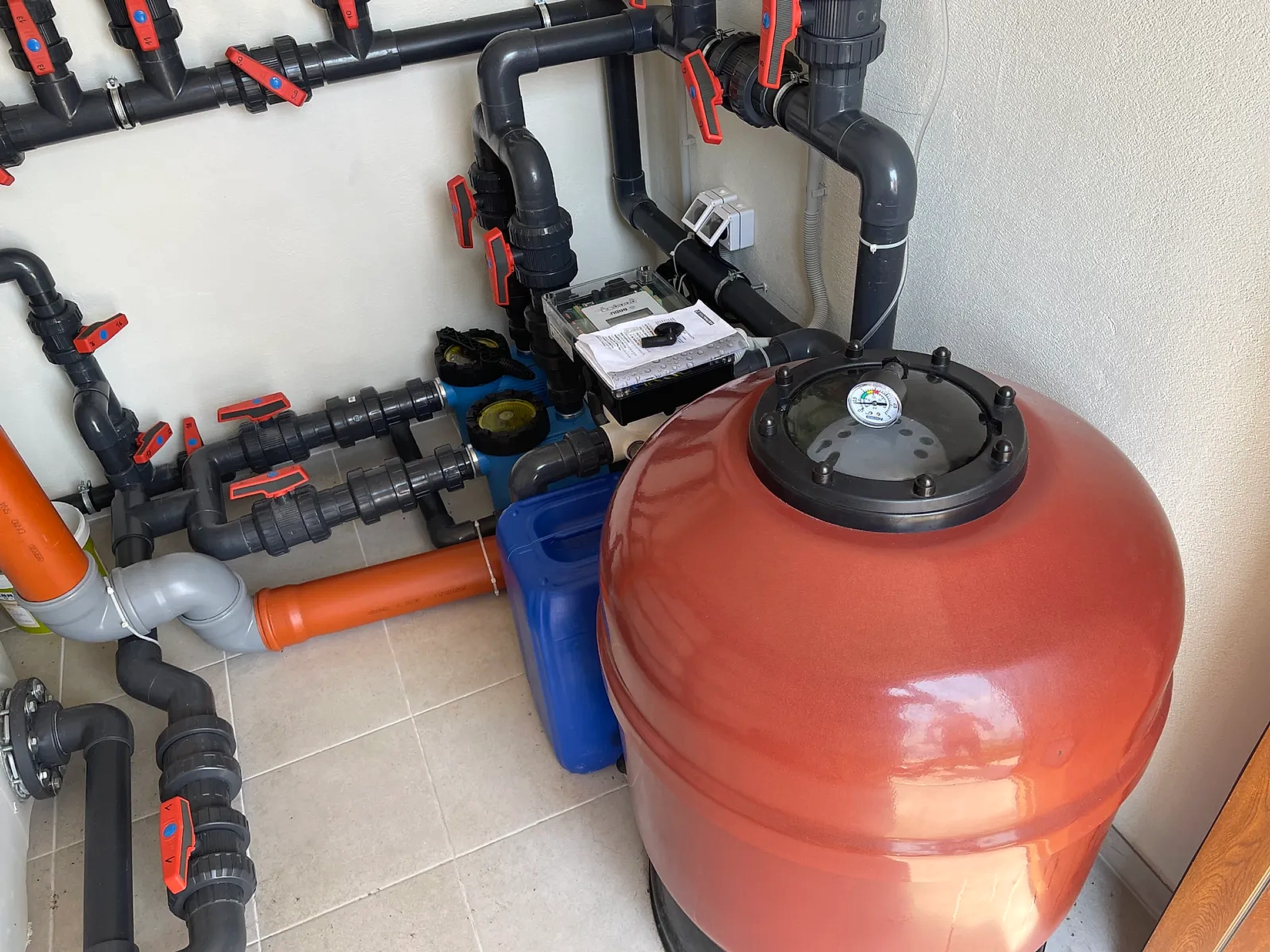
The filter is chosen to match the pool volume and the pump flow rate, so that the full volume of water passes through it at least 3 times in 12 hours.
Pumps
Role in the system
The pump keeps the water circulating constantly. Every other piece of equipment depends on it: if the pump stops, filtration, heating and chemical dosing stop with it.
Designs and materials
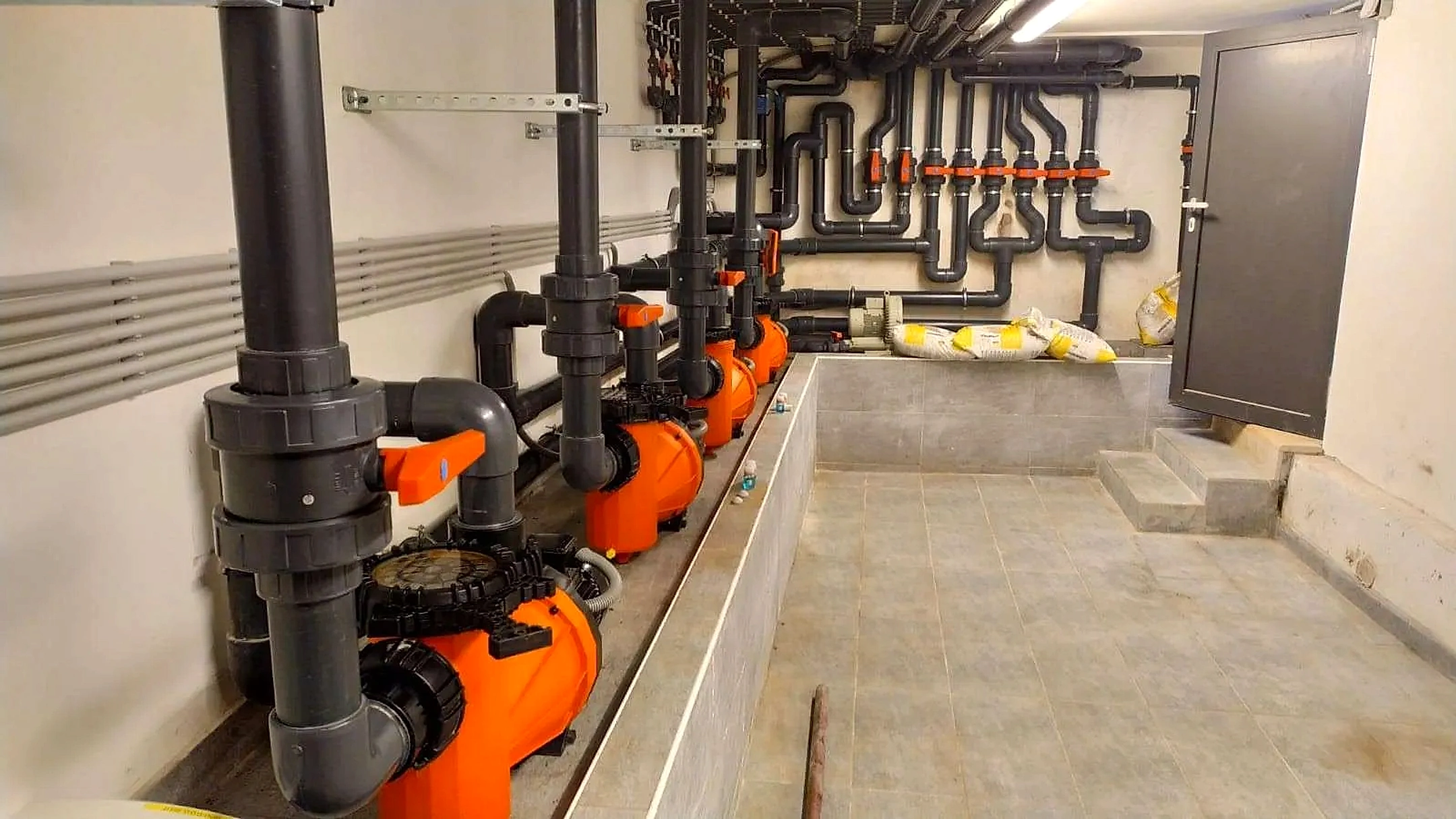
Family pools use self-priming centrifugal pumps with a strainer basket, with housings made of chemical-resistant technical plastic. Larger and public pools, as well as seawater pools, call for pumps made of bronze or suitable alloys, and for low-speed designs that run quieter and last longer in continuous operation.
Placement
The pump is installed in a dry, ventilated equipment room.
Pool lighting
What it is for
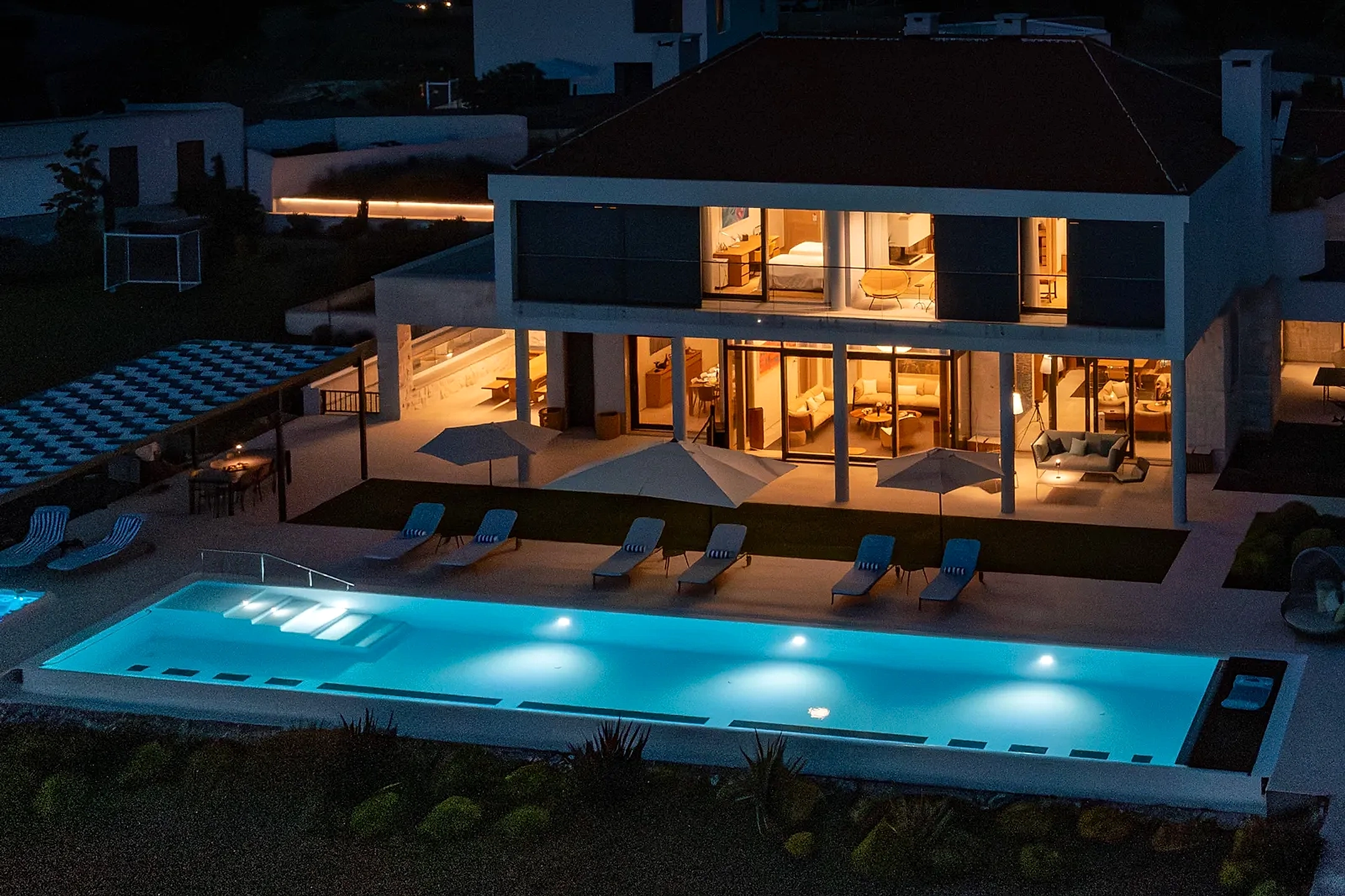
Underwater lighting makes evening and night swimming possible and gives the pool the look that turns it into an ambient feature of the garden. It also adds safety, since the illuminated floor of the pool is visible at all times.
Technology
LED floodlights are the standard, in white or with changing colors (RGB) and programs. They run on a safe 12 V supply through a transformer housed in the equipment room. Compared to older halogen bulbs they consume a fraction of the power and last for years, and they can be tied into the pool automation or a remote control.
Planning
The number and layout of the lights follow the size and shape of the pool, as a rule with the light pointing away from the house so it does not glare at the terrace.
Pool heating
What it is for
An unheated outdoor pool on the Adriatic is comfortable for swimming roughly from June to September. Heating stretches the season into spring and autumn, and indoor pools with heating run all year round.
Heat pumps
The most common solution is a heat pump, which draws heat from the surrounding air and transfers it to the pool water. For every kilowatt of electricity it uses, it delivers four to six kilowatts of heat, so the running cost is low compared to classic heaters. Inverter models adjust their output to the need and run quieter. The unit is sized to the water volume, the position of the pool and the target temperature.
Other systems
Heat exchangers connect the pool to the house's existing central heating or heat pump, which is common with indoor pools. Solar systems heat the water at no energy cost but depend on the weather, so they are mostly used as a supplement. A cover is recommended with any heating, because an uncovered pool loses most of its heat to evaporation overnight.
Water treatment
What it is for
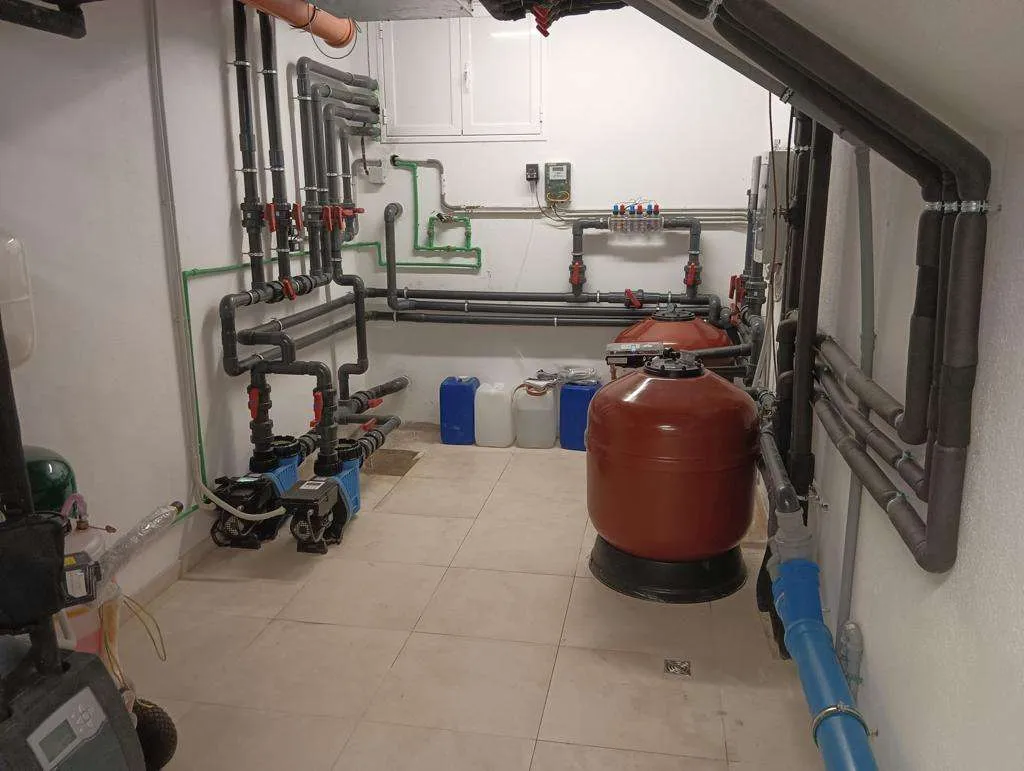
Water treatment keeps the water healthy to swim in: it destroys bacteria and algae and prevents the water from clouding. It disinfects and sterilizes the water and regulates the pH value.
pH value
The basis of every treatment is a neutral pH between 7.2 and 7.6. In that range disinfection works at full strength and the water does not irritate skin and eyes. A pH too high causes scale and cloudiness, too low corrodes the equipment, so pH is checked and corrected before anything else.
Methods of disinfection
The classic method is manual dosing of chlorine, algaecide, flocculant and pH regulators in granules or tablets. Alongside it there are active oxygen systems and salt electrolysis.
Automation
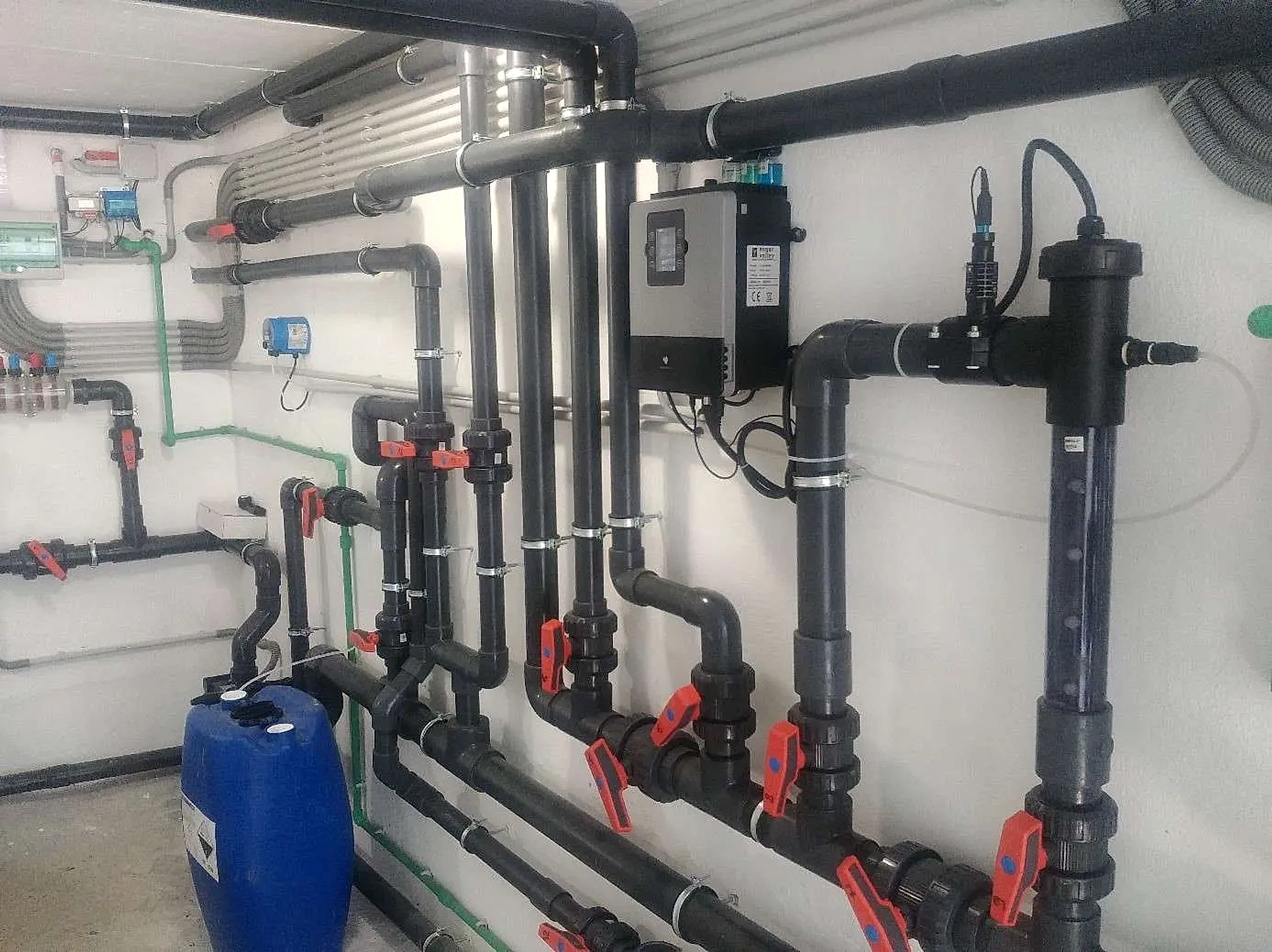
Automatic systems are salt electrolysis, hydrolysis, UV lamps and the like.
Pool cleaning
What it is for
Filtration cleans the water, but not the floor, the walls or the waterline. That is the job of cleaning equipment, from hand tools to autonomous robots.
Robots
The robot goes into the pool and works its way across the floor and walls on its own, and on most models along the waterline as well. It collects dirt in its own filter, so it puts no load on the pool's filtration. The number and length of cycles are programmed, and after cleaning the robot is taken out of the water and rinsed. Models differ in the pool size they are built for and in the fineness of their own filter.
Hand tools
The basics are a net for collecting dirt from the surface and the floor of the pool, a telescopic pole, a wall brush, a vacuum head and a vacuum hose that connects to the suction inlet or, in some cases, directly into the skimmer. The waterline takes dedicated products or sponges, because grease builds up there that a robot does not remove completely.
Covers and reels
What they are for
A cover keeps the heat in the water, reduces evaporation and keeps dirt out of the pool. A covered pool loses far less heat overnight and needs cleaning less often.
Types
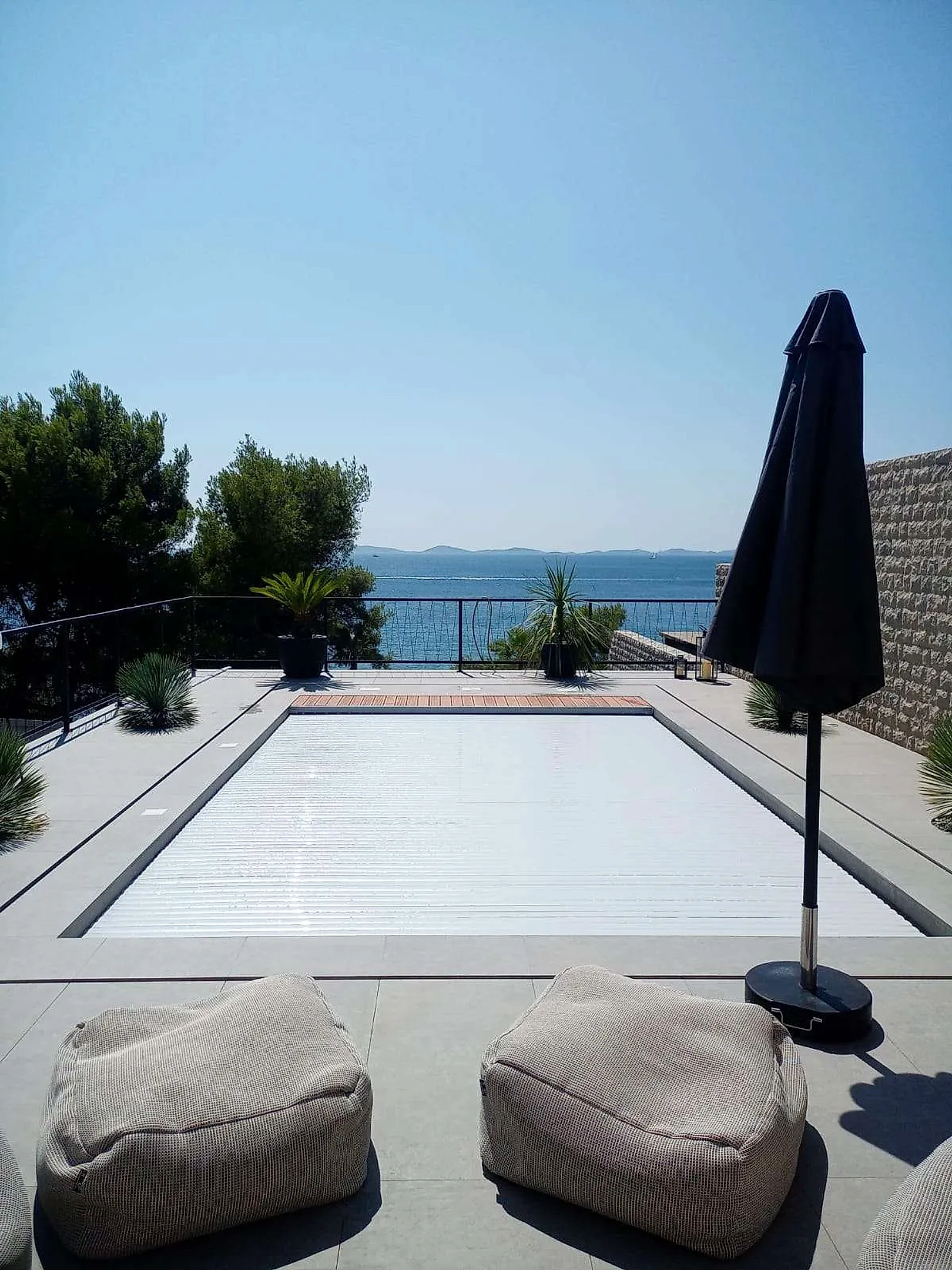
A solar cover is a floating foil with air chambers that lets the sun's heat into the water by day and slows cooling by night. It winds onto a reel at the edge of the pool. A winter cover is a strong sheet fastened above the pool over winter to protect it from leaves and weather, and opaque versions also stop algae growth. A slatted cover consists of plastic slats that float on the water and wind onto a shaft, by hand or by motor, so the pool opens and closes in under a minute.
Choosing
The type of cover follows the purpose: solar foil to stretch the season at the lowest cost, a slatted cover for daily use and a tidy garden, a winter cover for protection out of season. With a slatted cover, the space for the shaft is planned into the pool design from the start.
Water features
What they are for
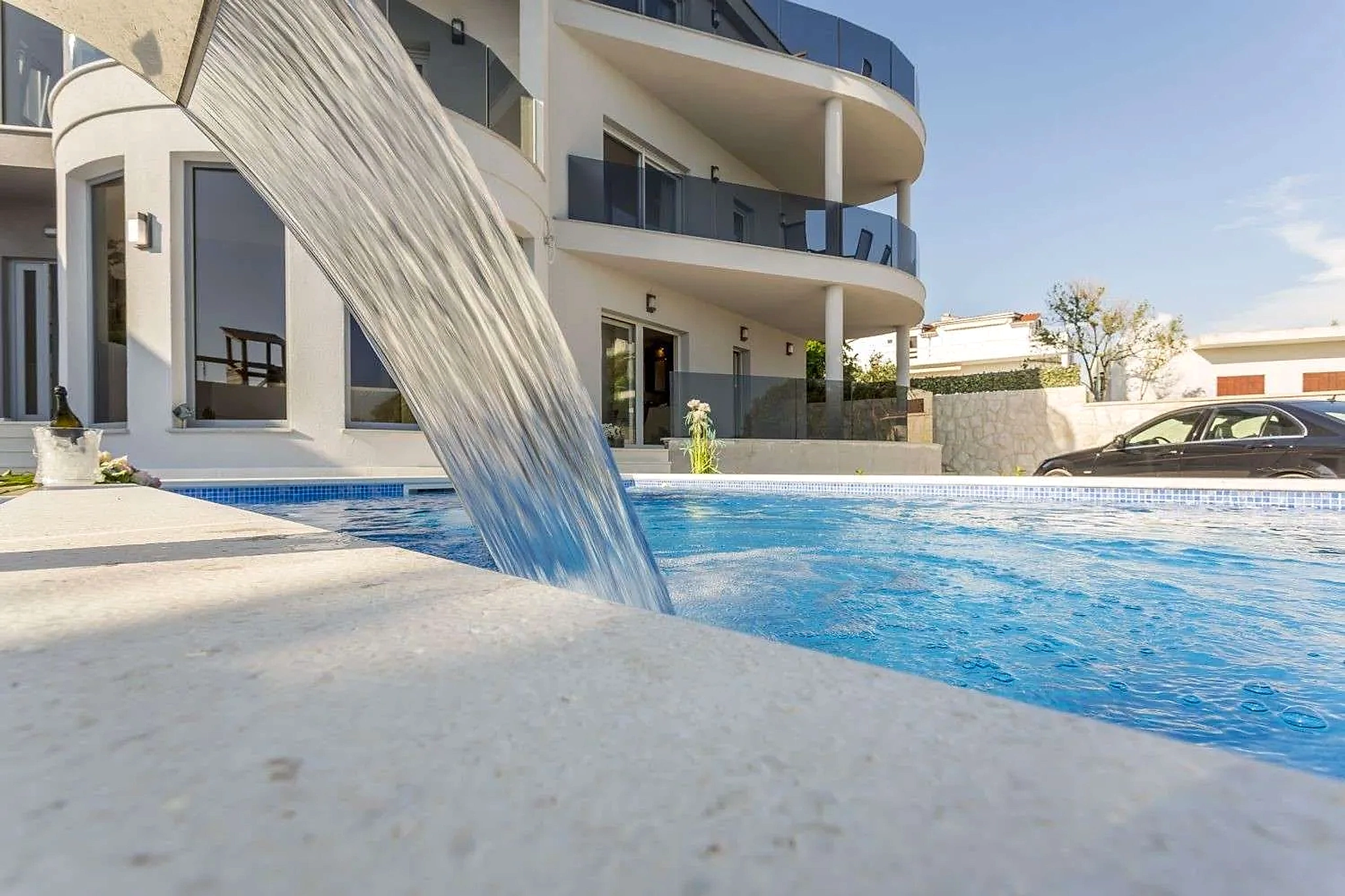
Water features widen what a pool can be used for. A counter-current unit creates a stream to swim against in place, turning even a smaller pool into a training pool. Massage jets and air benches give a hydromassage effect, while waterfalls and water curtains add the sound and look of moving water.
Installation
Each feature has its own pump and pipework, separate from the filtration. The built-in elements of the features are installed during construction of the pool, so the list of desired features is settled at the design stage. Control is by pneumatic or piezo buttons at the pool or through the automation, together with the lighting and the rest of the equipment.
Pool surroundings
What it is for
The equipment around the pool decides how practical and safe the pool is in everyday use: how people get in and out, where they rinse off and how the area is protected.
Entries and handrails
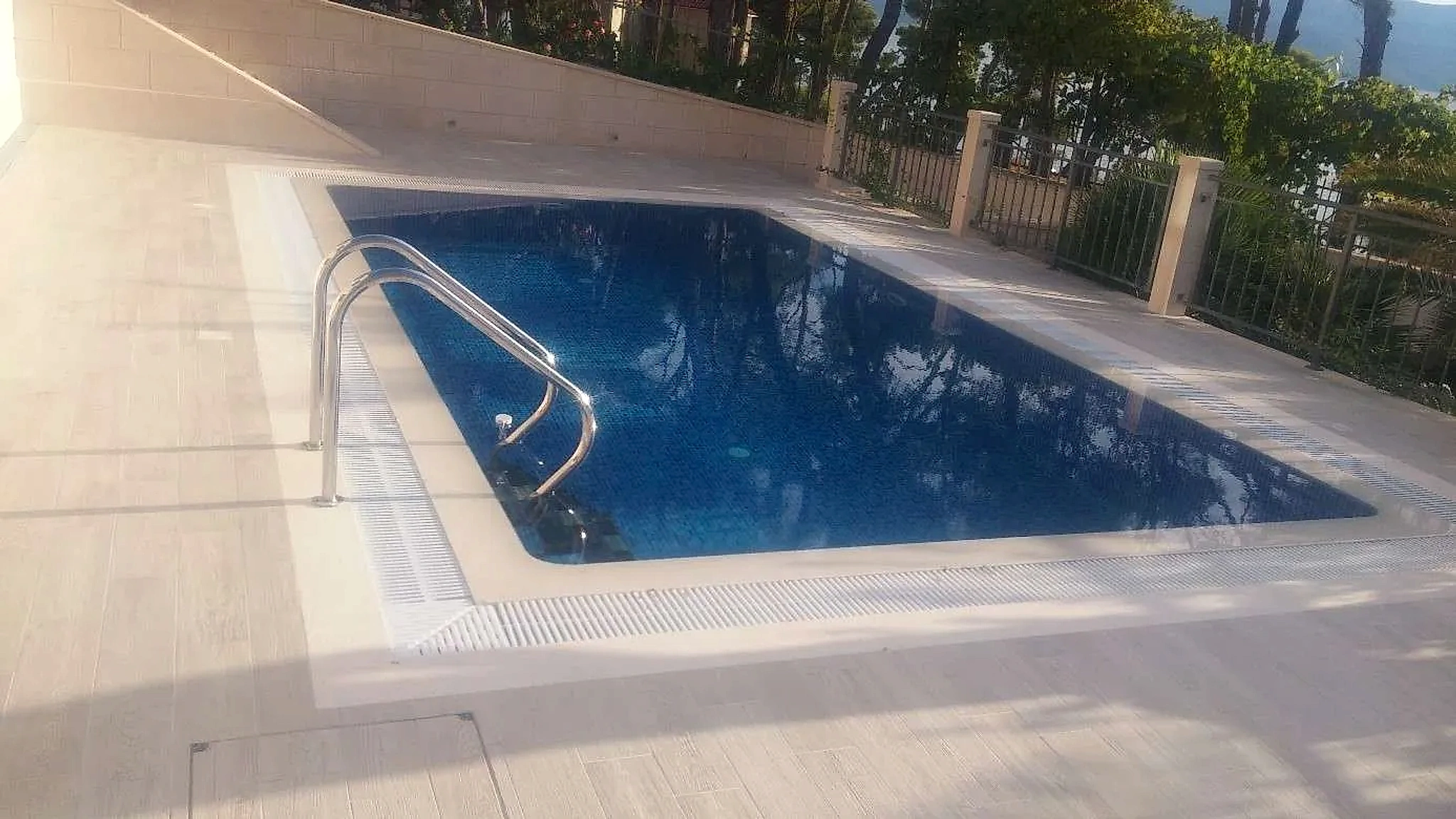
Ladders and handrails are made of AISI 316 stainless steel, which resists corrosion. With concrete pools the entry is often built as steps in the structure itself.
Showers and rinsing
An outdoor shower by the pool is there for showering before and after swimming, which keeps lotions and dirt out of the water. Solar showers heat water with sunlight in their own tank and need no hot water supply, they connect to an ordinary garden hose.
Safety
For families with small children and for pools at rental villas, safety elements are planned in: non-slip surfaces around the pool, fences or safety covers, and alarms that signal a fall into the water.
Not sure what your pool needs?
Tell us what kind of pool you are planning or already have, and where it is. We will propose the equipment that fits it and send a quote.